Therefore, dear reader, if you suffer from any of the above-mentioned ailments and want to deal with it, please contact us. However, it should be remembered that the causes of some of the diseases listed above may also lie outside the spine, then another type of treatment should be applied.
Spinal hernia
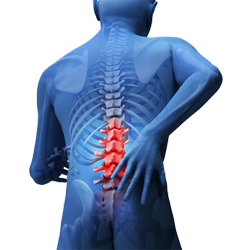
Spinal hernia
Strong but flexible intervertebral discs together with the muscles support the spine. The discs weakened by hernia do not hold the vertebrae properly in the physiological axis of the body, increasing the load on the muscles in the given area.
The muscles tire quickly and the pain occurs. In the diseased area, blood circulation is disturbed. Muscles and nerve roots are not getting enough nutrients. The swelling is removed only through the lymphatic and blood vessels, only thanks to microvibrations that arise thanks to the dynamic tightening and relaxing of the muscles. The muscles, however, are overloaded and the swelling prevents them from being fully functional again. This is how the circle closes. Weakened muscles do not support the spine sufficiently. Even a slight load can lead to complications. The most dangerous are thrusts and sudden movements. You must be especially careful in case of a hernia of the intervertebral disc. Traveling by various means of transportation becomes a problem.
Stages of herniation of the intervertebral disc
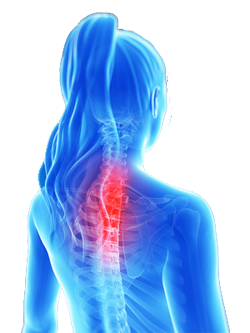
Stages of herniation of the intervertebral disc
The problem with treating someone with an intervertebral disc herniation is that it can't relax, and the back muscles are overloaded anyway. Performing a regular massage can be very dangerous. Careless movement may lead to further tissue damage in the affected area and, after a few hours, aggravate the situation. Even if your well-being improves immediately after the massage, the swelling may increase after 6 hours.
Treatment of the spine and joints without surgery
Depending on its location, size, and nature, a hernia can be dangerous in different ways. You can only find out by performing an MRI. Hernias that put pressure on the spinal cord or its roots are especially dangerous. They require immediate surgery. Symptoms may be acute urinary retention and direct disruption of other internal organs that cannot be removed by first aid measures.
A hernia that compresses the spinal cord and requires surgery is rare. Most cases can be treated without surgery, even if the hernia is pressing against the roots. The most important thing during rehabilitation is to help the body remove swelling for several months and quickly restore the proper functioning of the back muscles. Side effects may occur with long-term use of anti-inflammatory drugs. Therefore, the rehabilitation of a person suffering from discopathy should be based on treatment without the use of pharmacological agents.
Sciatica

Sciatica
Sciatica is an inflammation of the sciatic nerve, causing pain in the lumbar spine, buttocks, thighs, shins and feet - occurring simultaneously or individually in one of the areas. Most of these symptoms are recognized by doctors as inflammation of the sciatic nerve and treated with medication. Such treatment does not bring the desired effect because it does not remove the cause but only drowns out the symptoms.
This is where manual therapy comes in handy. The specificity of the procedure consists of restoring the correct position of the vertebrae, thus releasing the pressure on the nerves and the intervertebral disc, which was the actual cause of the pain. No painkillers, antispasmodics, or anti-inflammatory drugs are used. They can, at best temporarily overcome the effects of the disease.
Spine alignment treatment removes the root causes. A neurosurgeon would perform a spine surgery which would excise the tissues that compress the nerve, also removing the cause. In 90% of cases, surgery turns out to be unnecessary, and by setting the vertebrae correctly, thus restoring the proper mobility of the spine, all causes and symptoms are eliminated without surgery.
Scoliosis
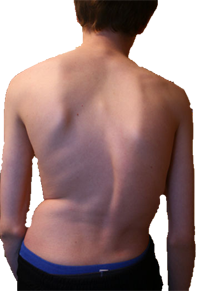
Scoliosis
It is impossible to list all the diseases that can be treated manually. But there are diseases that cannot be cured otherwise effectively. Of course, we are talking about scoliosis (lateral curvatures of the spine of various sizes, including the commonly known as "hump").
All those who had direct contact, be it as a patient or as a doctor, know how much of a difficult and controversial topic this is. Of all scoliosis, the biggest problem is those of unknown origin - idiopathic scoliosis (90% of all scoliosis). Classical medicine cannot remove it due to the lack of knowledge of the cause.
But it was in fact discovered by natural medicine a long time ago and despite its effectiveness, it still remains unnoticed by doctors, including the highest scientific authorities. However, the lack of recognition does not prevent proper treatment. It turns out that the cause of idiopathic scoliosis is the so-called "Blockage of the head and neck joints" of the fetus in the womb. The tightness of the uterine space forces the wrong posture. It is also influenced by the posture of the pregnant mother and the circumstances that occurred during childbirth. Undisclosed blockage of the cervical joints carries the most serious risk of developing scoliosis, the diagnosis of which will be possible only at the age of 7 to 9, when the lateral curvature of the spine will be very visible.
Unfortunately, even then it is incorrectly diagnosed by doctors as protruding and unevenly placed shoulder blades and shoulders.
And the traditional method of treating scoliosis, consisting in straightening exercises, not only does it not help but also deepens and accelerates the development of the defect.
Migraine
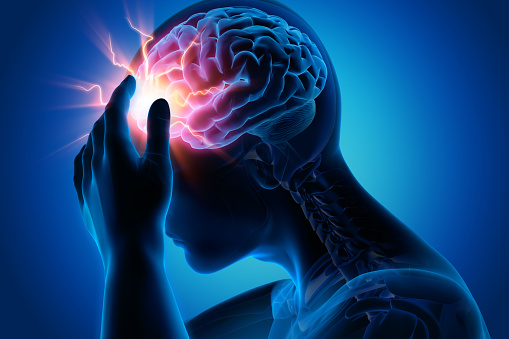
Migraine
The underlying cause of migraine is malfunctioning of ion channels, platelets, and neurons in the brain. Going deeper, it is the cry of our body - in which there is an imbalance at the level of the spine, especially the cervical. The pains are additionally aggravated by emotions, sudden changes in weather and physical exertion. There is often photophobia and hyperactivity to sounds and smells, sometimes even vomiting. By restoring the balance of the spine with manual therapy, you can significantly reduce the strength and frequency of migraines. In the event of a migraine attack, it can also be eliminated with an appropriate massage (instead of toxic drugs).
Hallux valgus syndrome

Hallux valgus syndrome
Hallux valgus syndrome, i.e. hallux is a disease that occurs in the vast majority of women (it is explained by a weaker ligament and capsule system, as well as a preference of elegant footwear at the expense of foot comfort). It often happens to people who dance regularly. It has a genetic basis, but also to a large extent can be caused by problems in the cervical spine and pelvis. Under the influence of the deformation of the big toe, the entire biomechanics of the foot and the distribution of body weight change, which later affects other structures that stabilize feet and neck. Surgery for a bunion is a cost, suffering, and long rehabilitation time, with no guarantee that the bunion won't come back in a few years. However, a lot can be done with hallux valgus syndrome with manual therapy. You need to restore the body's natural balance, look for the causes of the disease, stimulate with clavicles and manual actions (levers, mobilizations) at critical points causing pain and disease progression.
Carpal Tunnel Syndrome

Carpal Tunnel Syndrome
Carpal Tunnel Syndrome: Carpal tunnel disease - is a disease resulting from the ongoing compression of the median nerve in the carpal tunnel, usually caused by inflammatory edema of the nerve. Sometimes it is also a post-traumatic (or degenerative) tightening of the canal space. This often causes numbness and tingling of the fingers, muscle atrophy, neuralgia in the wrist, weakening of the grip strength of the hand and the thumb itself. Doctors often propose surgery for such a disease, while the carpal tunnel can often be cured with appropriately selected clavitherapy, often even within one treatment.
Rheumatic Disease
In addition to the typical spinal disorders, there are also many diseases, the cause of which is often unknown, but their effect manifests itself in the motor system. These include rheumatic diseases (rheumatoid arthritis, ankylosing arthritis, psoriatic arthritis, etc.). In these cases, thanks to manual procedures, the mobility of individual affected joints is maintained, and thus the efficiency of the entire musculoskeletal system is ensured.
Other pain conditions
The diseases presented above are the most common cases, thanks to which manual therapy is being talked about more and more often. This is especially emphasised thanks to people for whom backbone problems are just an unpleasant memory.
The list of diseases in which manual medicine can help is long:
- other headaches,
- dizziness, vertigo,
- epilepsy,
- tinnitus, double vision,
- difficulty swallowing (throat lump)
- inflammation of the ears, sinusitis,
- chronic runny nose, purulent tonsillitis (angina),
- bronchial asthma, bronchitis,
- neck pain syndromes, including the so-called torticollis,
- stiff shoulder syndrome (frozen shoulder),
- tennis and golfer's elbow (epicondylitis),
- intercostal neuralgia,
- radiating sternum and subscapular pain,
- heart palpitations and arrhythmias, large fluctuations in pressure,
- inflammation of the urinary tract, urinary and fecal incontinence,
- inflammation of the ovaries, difficulty getting pregnant,
- painful and irregular periods,
- degenerative pain in the hip and knee joints,
- swelling of the lower limbs,
- heel spurs, some dislocations and sprains of the peripheral joints,
- clubfoot and lopsided knees and feet, flat feet,
- and many more.
Therefore, dear reader, if you suffer from any of the above-mentioned ailments and want to deal with it, please contact us. However, it should be remembered that the causes of some of the diseases listed above may also lie outside the spine, then another type of treatment should be applied.